
Author: Hampton Bridwell

  • Inside Walmart’s new identity—and what it means for the world’s largest retailer

    Inside Walmart’s new identity—and what it means for the world’s largest retailer

    For highly visible brands, a refreshed identity can signal something deeper, and truly significant. For Walmart, de-emphasizing the name in favor of a more streamlined and contemporary look reinforces the retailer’s ongoing evolution from physical shopping destination to a universal source for all things—a brick-and-mortar-plus-digital powerhouse that goes head-to-head against competitors such as Amazon.

    It’s been entertaining to catch up on the social buzz around the launch of Walmart’s new identity. From the haters to a bit of teasing from competitors like Aldi, it’s certainly grabbing attention!
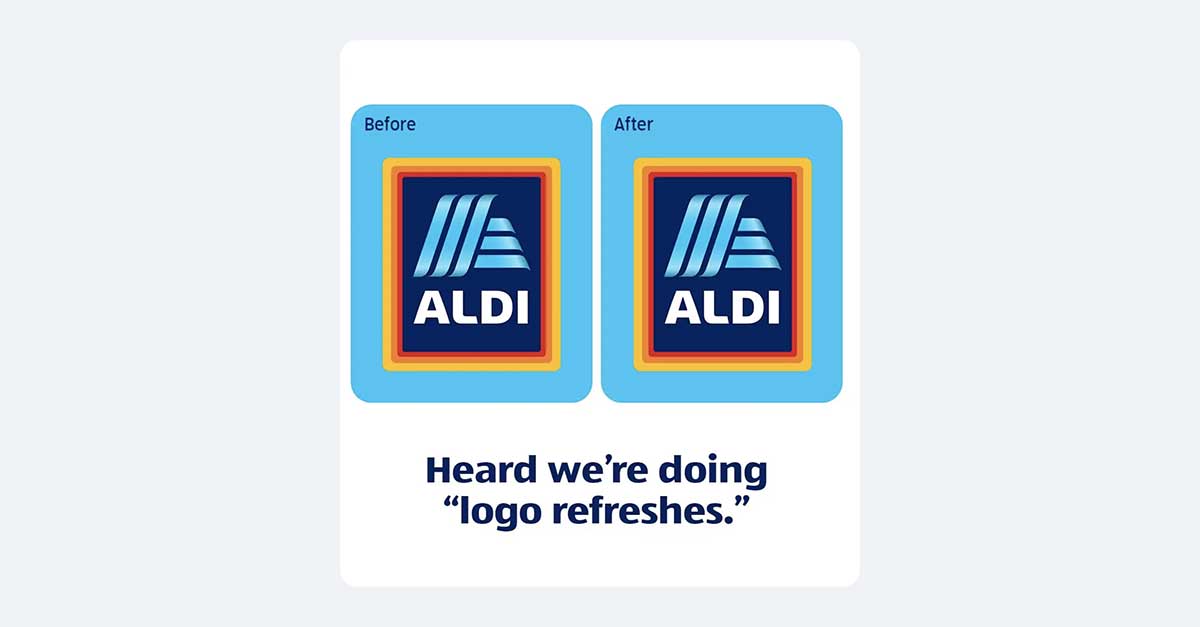
    Having been involved in many large rebranding programs over my career—and being acquainted with the team that did the identity that is the basis of this update—it’s interesting to look at the “before” and “after” and think about what it means for the company going forward. The team at Walmart is framing the new identity as a big launch. I’m inclined to agree.

    Change can be consequential, in a good way

    The last change to the Walmart brand—the launch of the sunburst logo and a fresh look roughly 20 years ago—was a huge change for the company. In a time when everything around us seems instant, the scale of refreshing a brand like Walmart is noteworthy. Just getting the 80,000 trailers repainted probably took years!

    That rebrand recast Walmart’s image, moving it from stodgy shopping experience to a much more vibrant (even fun) expression. That was a big shift, and proved to be a key driver of massive growth over the past two decades. It showed the power of a new identity to reach new audiences and expand the scope of the business.

    This time, the rebrand reflects Walmart’s pivot to digital

    With this new refresh, something not being discussed much is the new symbol, which no longer has  the word Walmart locked up to it, on applications such as walmart.com. On the surface it seems subtle, but there’s real meaning behind it.

    The beauty of moving away from the name is multifaceted. From an identity standpoint, the company is laying claim to its symbol and creating a shorthand for its brand promise. Only a lucky few can achieve this: Mastercard, with its two-circles-only logo, Apple and Nike spring to mind. The ability to de-emphasize, or even delete, the name is a fantastic opportunity that only the most recognized brands can claim. A simpler, more streamlined visual identity performs better in the digital environment across devices and experiences, reflecting the way today’s consumers prefer to engage.

    It’s not just about retail sales anymore

    I see another major benefit that’s not being talked about at all. Retail media! The rise of retail media is quietly reshaping the e-commerce landscape, and this relatively new space is worth billions to Walmart beyond product sales. Forecasts by the end of 2026 for Walmart’s retail media network exceed $6 billion in ad sale revenue. Walmart’s new brand identity is key to success in this high-growth, highly competitive market.

    In retail media, advertisers buy ad placement on e-commerce sites and other high-traffic channels—and in the case of Walmart, even in-store. From Walmart’s perspective, the strategy and refreshed identity clearly play to its advantage. By de-emphasizing the Walmart name and raising the profile of advertisers, Walmart becomes a prime (pun intended!) destination for consumers to discover products and services. Creating a neutral e-commerce identity helps drive both ad spending and retail sales—an enormous revenue opportunity.

    Unpacking Walmart’s new identity reveals that it’s about much more than putting on a fresh new face. What might feel like a subtle change in design reflects big, strategic moves that will drive exponential growth and opportunity for the company as it continues its dominance as the world’s largest retailer.

  • A year of achievement, a future of promise

    A year of achievement, a future of promise

    A letter from Hampton Bridwell, CEO

    As the team here at Tenet closes out 2024, we’ve received another mark of recognition as one of Chief Marketer’s 2025 Top Agencies of the Year, a listing of the industry’s most innovative marketing agencies. It’s further confirmation that our longstanding focus on brand innovation continues to be the right strategy.

    Looking forward to 2025, I’m excited by the direction our industry is taking. AI is driving massive change in the advertising and marketing space, as evidenced by the impending merger of two major sales and marketing holding companies: Omnicom Group and IPG. The combined enterprise is looking to scale up its use of AI and data analytics to inform and execute marketing—a huge force for change that will ripple upstream and influence how brands are built and managed.

    This is far from new territory for Tenet Partners. We’ve been at the forefront of the AI trend for more than five years with our data science practice, and are expanding AI use in our workflows and areas such as foresighting and inspiration. At the same time, we recognize the enormous value of human knowledge, insight, expertise, creativity and strategic thinking. AI promises to further empower us and our clients, but essential work such as strategy, messaging, key campaign elements and content will still flow from our most valuable resource: the skilled and experienced professionals who make up our team.

    As I look back on 2024, I’m struck by all we’ve accomplished. The recognition by Chief Marketer is just the latest in a long and growing string of awards and acknowledgements.

    This year alone, we’ve won six Rebrand awards and three Transform awards spanning everything from enterprise rebranding to creative strategy, brand architecture, and internal communications. We’ve also maintained our ranking as a Top 5 Branding Agency on Clutch, and as I write this we’re holding the #1 spot in the branding category Leaders quadrant. And to round it out, we’ve once again been recognized by Gartner in their annual buyer’s guide for brand consultancies.

    But of far greater importance than accolades is the stellar work the Tenet team has done for our clients—a list that includes some of the world’s greatest brands. In 2024 alone, we’ve taken on major initiatives for organizations such as The Smithsonian, Dow, Bluetooth, Hearst Health, Canon Medical, The Bancorp—the fintech innovator that issues PayPal and Venmo Mastercards—and more.

    I am both deeply impressed by and proud of our team. Tenet’s ongoing success—and promising trajectory for 2025—is powerful testament to their dedication and ability. It’s giving me great confidence as we all look forward to what the coming year may bring.

    Hampton Bridwell
    Managing Partner and CEO

  • The aerospace brand challenge: Competing with Silicon Valley’s disruptive influence

    The aerospace brand challenge: Competing with Silicon Valley’s disruptive influence

    The aerospace industry, long dominated by established players with proprietary systems, is facing an unprecedented shift. New entrants from Silicon Valley are rewriting the rules of the game, leveraging open architectures and open-source models to drive innovation and disrupt traditional aerospace brands. This transformation isn’t just technological—it’s existential, forcing aerospace brands to rethink how they operate and differentiate themselves in an increasingly open and collaborative environment.

    Historically, aerospace companies have thrived on proprietary technologies, creating “black box” systems that ensured ongoing revenue streams through long-term contracts and locked-in customers. However, much like the tech industry in the 1990s, when companies like IBM were forced to adapt to the rise of open-source software, aerospace brands must now contend with a similar wave of disruption. Silicon Valley firms are bringing a fresh mindset, using open-source principles to outpace traditional competitors in speed, flexibility and cost-efficiency.

    Take Anduril, a startup from California that has already secured significant defense contracts. By combining open architectures with cutting-edge AI, Anduril has positioned itself not just as a technology provider, but as a mission-critical partner by embracing open architectures. This approach mirrors the rise of open-source software in enterprise IT, where open systems allowed new players to innovate faster and more effectively than incumbents.

    For legacy aerospace brands, the implications are clear: the days of relying solely on proprietary systems to generate value are numbered. The future lies in open ecosystems, where collaboration and flexibility drive competitive advantage. This means evolving business models to focus on services, partnerships and integration, while still leveraging legacy strengths.

    Brands that resist this shift in both organizational culture and business model design face the risk of becoming obsolete, outpaced by faster, more agile competitors. Aerospace companies must learn from past disruptions, applying foresight to understand how the future will demand new ways of thinking and operating. By embracing new positioning to reframe attributes that underpin their business strategy and brand personality, they can stay relevant in an industry increasingly defined by innovation and collaboration.

    The challenge is not just surviving this wave of disruption but thriving in it. Brands that successfully navigate the transition will be those that redefine what it means to be a leader in aerospace, much like Silicon Valley companies have done in technology.

  • Thin-Slicing the Customer Experience

    “I know there’s a problem. I just can’t tell exactly what it is.” Have you ever said this to yourself as you and your colleagues were working through a tough customer-experience challenge?

    In Malcolm Gladwell’s book Blink, the author did a great job of showcasing research that reveals the incredible agility of our unconscious minds. His storyline is fairly simple. Humans make instinctive observations and associations in milliseconds. These observations, coined “thin-slicing” by psychologists in the early 1990s, have the power to inform rapid decision making. The second part of what Blink addresses is the danger of over thinking those immediate feelings and reactions. By trying too hard to explain or reconstruct the details, we do ourselves a disservice by distorting reality. Or, worse, we come to the wrong conclusions – and in turn, make bad decisions using built-up arguments to justify our thinking.

    The concept of thin-slicing offers useful insight into the nuances of customer experience and areas for brand innovation. Extending this concept to journey mapping, we can see that a rapid, holistic view of customer touchpoints has a lot of merit. We need to pay attention to our first reactions – those moments when our instinct, gut, intuition – whatever you want to call it – tells us there is a problem.

    One simple technique to help get to the heart of customer experience problems is the use of rapid word associations. As you sort through the finer touchpoints of the customer journey, don’t overthink or try to explain what is happening in that touchpoint. Just jot down a word or two that captures a key attribute of that experience. By accumulating impressions, patterns and themes begin to emerge.

    Blink mentions a practice for handling this, which can be easily applied to the journey-mapping process. Have team members assign one or two words to a touchpoint, but without explaining what they are trying to say. Then, come back to those words as a group to see if there any themes or patterns that jump off the page. More often than not, key observations can be captured with tremendous clarity – and, surprisingly, with great accuracy.

    In the field, we recommend that you be prepared to jot down immediate reactions at all times. Keep a paper journal with you, or use the notepad app on your phone. When you investigate a touchpoint, write down the first few words that jump into your mind. Then, take a few pictures if you can or draw a rough sketch that describes the problem without using any words. If you want, think of a solution right on the spot, describe it without any attention to what you can or can’t do. Focus on the intent, not the specifics. When you return to the office, put your notes into the journey map. Over time, you may find that by thin-slicing touchpoints, you get a deeper, richer view of the customer experience and inspiration for innovative, high-impact solutions.

    As with any technique for gathering information and generating insights, applying the thin-slicing idea to journey mapping requires care. How teams are designed, facilitated and engaged does matter. Done incorrectly, you run the risk of introducing bias. That may lead to false assumptions about what is really happening to customers and how to create a better experience.

    Done well, however, thin-slicing is a useful tool to unlock powerful insights that serve as the fuel for experience innovation – and, ultimately, more opportunities to win in the marketplace.

  • Managing for Disruption – Lessons in Building Brand Clarity

    Disruption and innovation are the mantras of the day. This is not just a management fad. These have become cornerstones of competitiveness. Technology—in particular the digitization of the enterprise—is having a profound impact on today’s businesses. It is accelerating market shifts, enabling the creation of new business models.

    That’s catching many companies off guard.

    Increasingly, forward-thinking companies are redefining themselves to remain relevant. They’re focusing on their core, and shaking up the organization to allow it to evolve organically. That is what is enabling these companies to thrive in the face of rapid technological change. By breaking free of old paradigms, they gain clarity of purpose and can better understand their path to the future.

    Jeffrey Immelt, CEO of GE, summed it up nicely in a recent interview, “A company like GE has to be all about change. It has to be all about picking what’s next, getting the company focused, making the company accountable.” Immelt goes on to elaborate on a critical point, “What we’ve tried to do is narrow our focus as a company, to be only those things that have significant core competency. Being only as broad as you are deep is the way that you have to think about running your company today.”

    The journey that GE has signed up for is an uncomfortable one. Change is always messy and unpredictable, requiring new ways of thinking and doing. Distilling the company and all it represents down to core ideas is no small task.

    How Can A Brand Enable Transformation?

    Today’s companies need a ‘True North’ to guide them as they evolve—a platform to articulate a vision for the future, and a roadmap to achieve defined goals. For marketers, that means reaching more broadly across the company to help coordinate activities, and designing tools that can ready an organization for the changes that lie ahead.

    The brand is one of the most powerful assets marketers have to help the company drive change, because it can enhance understanding of the company’s scope, differentiators, target demographic and core competencies. That insight allows a company’s leaders and employees to target challenges, discover new business opportunities introduced by disruptive technologies, and take more directed action to effect real and lasting change. To be effective in this role, however, the brand must have a clear definition and purpose.

    While brand clarity is crucial to success, it cannot exist in a vacuum. It is inextricably tied to business strategy and the environment. Before redefining the brand to reflect the company’s new focus, leaders must step back, study the world around it, and craft a solid business strategy on which an evolved brand can be built. By doing so, the company will be better equipped to make the critical business decisions that lie ahead.

    Companies that fail to proactively develop their business strategy are more vulnerable to shifts in market dynamics and may find themselves blindsided by new competitors. Operating on outdated business strategies, they become irrelevant. A case in point is Kodak. Despite being the inventor of digital photography and driving most of the early innovations, Kodak failed to capitalize on new disruptive technology and lost relevance in the marketplace.

    According to Tenet’s CoreBrand Index, Kodak still has a fairly solid brand, which is something of a surprise. On the other hand, it’s hard to erase such an iconic brand. In our collective consciousness, Kodak is forever tied to our most deeply held and emotional moments—photographs.

    SEE ALSO: No Brand Is Safe in the “Age of Disruption”

    While a strong brand like Kodak can insulate a company from a few bad decisions, it can only do so much to save a failed business strategy. In hindsight, it is easy to see that the film business had strategic control of the company and that everything else, including robust digital imaging assets, were ancillary activities that were not properly leveraged. Even with a late start, Kodak had the means to disrupt its own business and save itself. And, they had the brand foundation to do it. Unfortunately, Kodak did not have the leadership or the strategy needed to make the shift.

    Read the full article on Branding Magazine.

  • An Exciting New Chapter for Tenet Partners

    Tenet Partners makes strategic investment in Verv Innovation, LLC.

    Tenet Partners was built on the belief that creating exceptional brand experiences requires a multidisciplinary approach that brings together research, strategy, design, and digital. We believe the way forward to look at the world through the eyes of the customer and build brands holistically, fusing digital and real-world interactions and experiences to deliver greater value to businesses and their customers.

    By 2020, estimates suggest 25 billion Internet connected products will exist. The success of these products will be contingent on a company’s ability to drive transformational growth across the enterprise, integrating customer insights, business strategy, design and digital capabilities into products, services and experiences that people love.

    Just like the companies and brands we serve, in order keep pace in today’s digitally driven market, we must also evolve to meet industry demands and customer expectations. To strengthen our company and prepare for our next phase of growth, today we announced our strategic investment in Verv Innovation, LLC.

    For nearly 20 years, the Verv team has redefined how to create and deliver successful innovations for products that are used across homes and businesses. Combining deep industrial design and development experience with next-generation co-creation tools, the firm has emerged as a leader in the application of design thinking during one of the most pivotal times of change in business and technology history.

    By combining their proven techniques with Tenet’s global experience in business strategy, brand design and digital, we can now connect the customer experience in all channels and define the next generation of customer experience.

    Here’s to a future of many memorable brand experiences.

    Hampton

  • A message from our CEO

    A Q2 UPDATE TO TENET’S 2020 TOP 100 MOST POWERFUL BRANDS REPORT.

    As the United States moves through the uncertainty of the COVID-19 pandemic, the impact on corporate brands continues and will for the foreseeable future. Companies in diverse sectors are experiencing extremes brought on by the new realities of isolation and remote work.

    Most notably (and unsurprisingly), the sector that is outpacing the broader market in BrandPower is tech. For the first time in the history of our tracking study, Coca-Cola relinquishes its long standing #1 ranking to Apple. Considering that Apple essentially accomplished this in 20 years speaks volumes.

    The rapid march of Amazon up the rankings is notable too. In just two quarters, Amazon has risen from #12 to #8, upsetting competing businesses along the way. Beyond traditional retail, the sector that is folding under the weight of Amazon’s unrelenting momentum is transportation. Both FedEx and UPS dropped 4 and 3 positions respectively. All those Amazon trucks and vans on the road are imprinting a new brand on the physical landscape once dominated by others.

    From all estimates, the pandemic will drag on until vaccines become widely available: we can expect the major impact to last for another 12-18 months. During this period, corporate brands will continue to experience increased volatility and reputation risk. This is already being seen in the retail sector, where record numbers of bankruptcies are emerging. To add to the economic strife rattling the economy, as of October travel, tourism and entertainment remain depressed. Cruise lines, airlines, hotels, restaurants, live entertainment, theaters and other related businesses are still struggling to restart under the current protocols and more importantly, are fighting to reestablish consumer trust.

    For the fortunate winners, ever-increasing opportunity seems to be cementing their futures. The challenge for many of these organizations, especially in tech industries, is how to manage downside risk as the environment normalizes in the years ahead. These brands have the potential to gain too much power in the eyes of the government and consumers. History shows that this can create unforeseen backlash, sending brands that have experienced nothing but growth into uncharted territory. 2020 continues to be a landmark year and as we enter 2021, we expect volatility to be the new normal for brands across all sectors.

    Hampton Bridwell
    CEO, Tenet Partners

    View our original launch message here.

  • A message from our CEO and Chairman

    Welcome to Tenet’s 2017 Top 100 Most Powerful Brands report.

    We’re living in a time of blurred lines. Collisions of corporate brands, and industries, that rarely compete are increasingly common. At the same time, the meteoric rise of convergent brands, innovating and engaging in new ways to redefine entire industries is complicating the business landscape. Amazon, for example, is hard to put neatly into any one box. It’s into e-commerce, physical retail, technology infrastructure, media, electronic hardware, logistics… and the list goes on.

    The factors driving this kind of wide-ranging innovation and disruption have significant implications for how leaders build and manage their brands to compete. It’s clear that management and accounting systems are not keeping up and must change quickly to comprehend the enormous value of brands and the diverse landscape in which they must function.

    Innovation and disruption-driven opportunities have surfaced for investors too. Analysts are waking up to the reality that brands represent a significant component of enterprise value. Yet, few tools are available to incorporate a brand’s intangible value into their analysis.

    Answering a single question: “What does a brand contribute to a company’s value?” has more significance than ever before. Tenet’s CoreBrand® data helps answer that question by tracking nearly 1,000 different companies across 50 industries. It is from this data that we derive the findings for the Top 100 Most Powerful Brands report.

    That same CoreBrand 1000 Data is now delivering value to an increasing range of stakeholders. This year Exponential ETFs and Brandometry launched the new BVAL ETF based on the BTW50 index, giving investors a vehicle to leverage our research. This is an exciting new development, validating our belief in the power of brand data and analytics related to corporate performance.

    Tenet is also bringing the benefits of brand data analytics to the boardroom. Providing insights into corporate brand performance and brand value is the mission of our CoreBrand Analytics practice. Its rolling quantitative research provides the only on-demand, dynamic corporate brand valuation and performance dashboard across all industries. And now we’re expanding our research, this year introducing a new Culture of Innovation metric to begin exploration of how this critical competitive element impacts the intangible value of brands.

    With the publishing of our 10th annual report, we are more excited than ever to share that the Tenet CoreBrand 1000 is playing an essential role in helping business leaders and investors innovate in this rapidly evolving environment.

    Hampton Bridwell
    CEO, Tenet Partners

    James Gregory
    Chairman, Tenet Partners

  • A message from our CEO and Chairman

    Welcome to Tenet’s 2016 Top 100 Most Powerful Brands report.

    The contribution that ‘intangible assets’ make to the US economy is undeniable. In fact, recent studies show that roughly 84% of the value of the S&P 500 is made up of intangible assets including corporate brands.*

    Although a company’s brand is considered an intangible asset with significant value, the value of a brand is not calculated on the corporate balance sheet until it is bought or sold. Most companies will at some point be acquired, merge, or buy other companies – but until one these events happen, brands are not managed as a balance sheet asset. Further to this point, leading companies invest significant resources in their brand-building initiatives, but management and investors don’t have a clear view into the brand and the true impact it has on the company’s value. Without question, management, boards and investors must understand how brand performance is linked to business performance and value creation.

    To help companies determine their corporate brand performance and brand value, Tenet’s CoreBrand® Index (CBI) was created to answer a single question – “What does a brand contribute to a company’s value?” Today, our CoreBrand Index is the only research methodology and analytical model that yields data from a continuous examination of a company’s brand and the factors that contribute to enterprise value.

    Every year of over 25 consecutive years, we track nearly 1,000 different companies across 50 industries to develop the benchmark data for our CoreBrand Index. It is from this data that we derive the findings for our annual Top 100 Most Powerful Brands report. 2016 marks our 9th annual publication of this ranking.

    This also marks a milestone for Tenet and the world of branding and marketing. CoreBrand Data provides the foundation for the first ever investable Index that identifies stocks that are exhibiting a discount of brand and intangible asset value to market capitalization. Developed by BrandTransact® Worldwide, the launch of the BrandTransact® 50 (BTW50) is a watershed moment, and we are proud to be a key partner in helping investors tap into unrealized value of companies whose share value has not yet been fully recognized by the US markets. Over a five-year period through August 2015, the BTW50 Index outperformed the S&P 500 by over 500 basis points.

    We hope this report and the case studies within provide a deeper understanding of key trends for individual companies, for different sectors, and for the market as a whole. Ultimately our mission is to help executives and investors gain the knowledge they need to unlock the power of a company’s most important asset – their brand.

    Congratulations to the Top 100 Most Powerful Brands of 2016.

    Hampton Bridwell
    CEO, Tenet Partners

    James Gregory
    Chairman, Tenet Partners

    * (Source: Ocean Tomo, LLC)

  • A message from our CEO and Chairman

    A message from our CEO and Chairman

    Brands are boldly moving forward. This momentum is the strongest since the recession, thanks to significant investments in business model innovation, digital and brand. Corporate leadership is looking to deliver growth by reshaping customer experiences. Our Top 100 report shows these leaders are outpacing their peers.

    The macro trends that are driving change are fairly concentrated – industry lines blurring, digital convergence, and the emergence of fast-moving disruptors. Together, these trends are altering consumer behavior, delivering new experiences and driving value through innovation. In some industries, the fast pace of change is overwhelming management teams.

    To seize on the opportunity this presents, leaders are reframing the marketing function to have greater influence on operations and shape customer experience, digital transformation and design of organizational culture. Success today requires a broader, more holistic view of the customer. A human-centered philosophy can translate into a common language that unites the various disciplines of business to ensure the enterprise is future-ready for the opportunities ahead.

    2015 marks the 25th anniversary of the CoreBrand® Index, a rich data set covering 1,000 companies. This represents a milestone in Tenet’s mission of enabling leaders to create value in one of the most critical assets for any organization: its brand and reputation. With eyes to the future, we see exciting times ahead for those pacesetters who successfully wrap their business strategy and brand experience around their customers’ needs and aspirations.

    We hope this 8th edition of the Top 100 Most Powerful Brands provides you with valuable insights as you seek to achieve brand leadership and drive business growth.

    Hampton Bridwell
    CEO, Tenet Partners

    James R. Gregory
    Chairman, Tenet Partners