Category: Perspectives

We think about brands and their impact on business…all day, every day. About the issues, the trends, the opportunities. About how the world is changing and what it takes for clients to succeed.

  • Why Hilton Had Me Captivated Until Good-Bye.

    I have been a Hilton HHonors Rewards member for several years now and was just recently notified that I earned Gold status. It has taken me so long to earn this elevated status because it is not that I am so much brand loyal, but rather place more of an importance on price and location when it comes to selecting a hotel. Granted, I do have a list of “acceptable” hotel brands that are always part of my consideration set when exploring options for both business and leisure travel. These tend to be the usual suspects — Hilton, Hyatt, Marriott and Starwood. Note: I am a Rewards member for each of these brands because they make it so easy to join and earn points. However, these Rewards programs are not enough to make me brand loyal. It’s plain and simple, the brand that best delivers against my core requirements will get my business and, in return, I will accrue points, albeit slowly.

    Sure my elevation to Hilton HHonors Gold status has brought with it a few “nice to have” perks. “Nice to have” means just that; they may or may not be memorable and are not considered important enough to trump price and location over brand loyalty. However, my Hilton brand experience has been brought to an entirely new level when I recently downloaded the Hilton app.

    This app has changed my life (when it comes to travel) and has increased my affinity for the Hilton brand. How? Simply put, it has made the user experience across the hotel segment of my customer journey memorable and even delightful. Across my entire customer journey (well, almost my entire journey) from property selection to registration and from pre-check-in, check-in and throughout the duration of my stay, Hilton has delighted and even surprised me on occasion. Unbeknownst to me, Hilton was the first hospitality company to enable room selection and customization via its mobile and web-based floor plans.

    As a registered guest, I received a “Welcome to Hilton” message via both e-mail and the app one day or so prior to my arrival. This “welcome” then prompted me to select a room of my choice. Mind you that Hilton had already pre-selected a room for me based on my personal profile, and that room selection was perfect I might add. However, I was given the option to switch and even upgrade my room (for additional $’s) from the hotel floor plan, if desired. This is similar to the process of selecting seats on an airplane. I have to say that this was pretty impressive for a hotel chain.

    But wait, there’s more. I was then asked if I would like to select from an extensive list of amenities and have these items waiting for me in my room upon arrival. This included snacks, beverages and/or toiletry items such as shampoo, toothpaste, etc. just in case I did not want the hassle of traveling with these items since many fall within strict FAA regulations at airport check-in.

    Then the ultimate delight in my user experience happened when the app prompted me to sign up for the Hilton Digital Key program. Apparently, Hilton announced that guests will be able to use their smartphone as their room key in a majority of hotel rooms by the end of 2016, but I must have missed this announcement and was pleasantly surprised to learn more about this user experience through the Hilton app. Signing up for and activating the Digital Key is easy; you simply use the app to confirm your arrival date and indicate an expected time of arrival. The Digital Key is then activated via your smartphone once your room is ready upon the date of your arrival. Once my digital key was activated, I followed the prompts, holding my phone in front of my room entry device and the phone unlocked the door. Throughout most of my entire journey, I did not come in contact with one Hilton employee except for the parking lot attendant. Don’t worry; I am sure that this interaction will soon be alleviated as well with self-driving and self-parking cars.

    This customer experience has certainly helped to elevate the Hilton brand for me with Hilton brand loyalty now top-of-mind. The personalization of the Hilton brand experience starting with the ability to select my own room and ensure that certain amenities are waiting for me upon arrival along with the innovative Digital Key technology all make the Hilton brand experience more personal, delightful, memorable and, most importantly, convenient. It is no wonder that Hilton ranks # 44 in Tenet’s Top 100 Most Powerful Brands 2016. In fact, Hilton’s ranking improved six points versus its #50 ranking in 2015. I am sure that innovation, disruption and the entire customer experience have contributed to this brand’s improved ranking. Other than Marriott, which ranks #81, there were no other hotel chains in Tenet’s Top 100 Most Powerful Brands Report. So Hilton must be doing something right to strengthen the power of its brand.

    With such a positive customer experience, you may be wondering why the title of my blog is Why Hilton had me captivated until good-bye. The one area where my customer experience did not come full circle was when it was time for me to checkout, which was quite early in the morning I might add. Upon leaving my hotel room, I opened the Hilton app and kept looking for the checkout option, searching under various topics, but found nothing related to checking out. I finally had to go to the front desk where I was told that this feature does not yet exist. I am not sure if the app checkout capability was not available for this particular location or if it has not been implemented in general. But what started as a delightful customer experience ended somewhat on a disappointing note. If I had known that I had to go to the front desk to checkout, I would have checked out the old-fashioned way – via my television. This actually would have been better than finding out that I did not have the ability to checkout via the app, which had become my trusted personal assistant throughout my entire business travel.

    Remember, when it comes to creating a memorable brand experience, every touchpoint throughout the customer journey is crucial. As we recently wrote about in our latest Take 5 series, mapping the journey across touchpoints is one of the many ways marketers can visualize the entire customer experience, and use it to effectively address shortcomings and seize new opportunities to foster customer loyalty.

    Have you had any recent customer experiences that have changed your brand perception even prompting you to consider becoming brand loyal as a result of that experience?
  • An Exciting New Chapter for Tenet Partners

    Tenet Partners makes strategic investment in Verv Innovation, LLC.

    Tenet Partners was built on the belief that creating exceptional brand experiences requires a multidisciplinary approach that brings together research, strategy, design, and digital. We believe the way forward to look at the world through the eyes of the customer and build brands holistically, fusing digital and real-world interactions and experiences to deliver greater value to businesses and their customers.

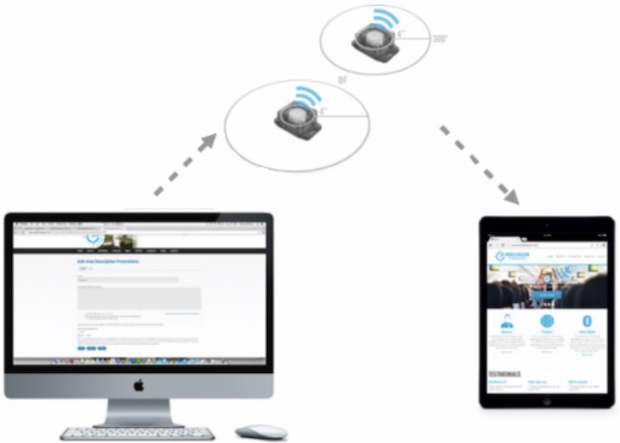
    By 2020, estimates suggest 25 billion Internet connected products will exist. The success of these products will be contingent on a company’s ability to drive transformational growth across the enterprise, integrating customer insights, business strategy, design and digital capabilities into products, services and experiences that people love.

    Just like the companies and brands we serve, in order keep pace in today’s digitally driven market, we must also evolve to meet industry demands and customer expectations. To strengthen our company and prepare for our next phase of growth, today we announced our strategic investment in Verv Innovation, LLC.

    For nearly 20 years, the Verv team has redefined how to create and deliver successful innovations for products that are used across homes and businesses. Combining deep industrial design and development experience with next-generation co-creation tools, the firm has emerged as a leader in the application of design thinking during one of the most pivotal times of change in business and technology history.

    By combining their proven techniques with Tenet’s global experience in business strategy, brand design and digital, we can now connect the customer experience in all channels and define the next generation of customer experience.

    Here’s to a future of many memorable brand experiences.

    Hampton

  • In Brands We Trust?

    One of the industry sectors tracked in the Tenet CoreBrand Index is called ‘Financial’, which encompasses a range of financial services brands, including retail banks in the U.S. In recent years, one of the better performing brands among these retail banks has been Wells Fargo. Looking at Wells Fargo BrandPower relative to 12 peer institutions (large national network banks), it ranks among the top 3 in every quarter from Q1 2013 to the most recent measurement, Q2 2016. Plus, it has realized the largest improvement (24%) in BrandPower among any of those top three institutions over that same period.

    Now, Wells Fargo’s performance in the CoreBrand Index comes as no surprise to me because before joining Tenet Partners, I spent several years as Director of Strategic Research at an industry leadership organization for financial services. And in virtually every study I commissioned to assess the performance and quality of large national network banks in the United States, the Wells Fargo brand mirrored what we’ve seen in the CoreBrand BrandPower Index in terms of the brand’s performance being one the best on customer sentiment, loyalty, deposit retention and most notably, in the quality of their lending.

    Now, as most recall, in the 2008-2009 economic downturn, sub-prime mortgages and questionable loans were at the center of the housing bubble collapse that drove us to the great recession from which we have only recently started to emerge. However, Wells Fargo stood apart as being one of the few financial services brands NOT tarred by accusations of the questionable lending practices that ultimately doomed some financial services brands, like Wachovia and Countrywide Financial. In fact, in the wake of the much maligned Toxic Asset Relief Program (TARP) that bailed out many banks at risk from the collapse of the financial markets, it was the Wells Fargo brand that most thought would emerge from TARP in the best shape.

    But oh, how the mighty have fallen!

    This past week it was revealed that a large number of Wells Fargo employees secretly created millions of unauthorized bank and credit card accounts without their customers knowing it since 2011. The resulting furor over the revelation, and the clumsy handling of it by Wells Fargo (which fired 5,300 low to mid level employees responsible while allowing the executive in charge of the troubled unit to retire with a significant financial package) has now cast the bank as the poster child for the same behavior and deceptive practices that were at the center of the 2008-2009 financial crisis.

    What is also troubling for Wells Fargo, and really the entire financial services industry, is that the behavior resulting in the Wells Fargo controversy had been going on for sometime with apparently the knowledge of Wells Fargo leadership. Still, little was done to raise an alarm, and those employees that tried to do so were either dismissed or fired for their efforts.

    Of course, this is not the only case of a well known, if not iconic brand being tarnished by a crisis largely of their own making; we need only think about Volkswagen and the diesel emissions scandal, and the recent Samsung debacle where their Galaxy smartphones have spontaneously combusted, for reminders.

    But the issue with Wells Fargo is different given the recent history of the financial services sector of which they are a part, and the basic tenets of trust and transparency that are needed for stakeholders to engage with these brands. The trust and transparency between the banks and their customers was severely tested in 2008-2009 and in the subsequent recession that roiled people’s lives. And now, just as many felt the lost trust was slowly returning, the Wells Fargo scandal has dashed any of those gains and called the entire industry’s trustworthiness into question.

    At the time of this blog’s posting, recent developments reported in the most recent issue of Time indicate that the “Justice Department has reportedly issued subpoenas and begun a criminal probe.” And that “U.S. federal prosecutors are vying for the right to go after the bank, and the Office of the Comptroller of the Currency is weighing penalties for managers.” There have also been limited discussions of “the unlikely prospect that special powers could be triggered, allowing regulators to break up Wells.”

    It will be interesting to see if Wells Fargo can survive or, as so many of the formerly well-known brands that were lost in the downturn, Wells Fargo becomes yet another bad memory of a brand that lost its way.

  • Is ESPN a Brand Poised for Decline?

    The problems at ESPN have been well documented. They significantly over paid for the rights to the NFL’s Monday Night Football package, paying in the same ballpark as NBC paid for the league’s premier matchup on Sunday Night Football. This move made it impossible for the network to operate profitably. Initially they laid off 4% of their global workforce, but it was all behind the camera workers, not on air talent. However, over the past year there has been significant drain on their talent.

    As you tune in to pre-game NFL coverage and other shows, much of the old familiar talent is gone. As you may know, sports fans are creatures of habit. The customer experience for many of these viewers is being trampled on. It would be one thing if you slowly introduced new talent to these flagship programs, but when you tune into shows like Sunday NFL Countdown and Monday Night Countdown, with 1 or 2 exceptions, the faces are all new. It disrupts the comfort level that fans have in this programming.

    This all comes at a very bad time for ESPN. NFL viewership has been down for each of the past 6 Presidential election years, this year it is off more than any other. Many speculate that it is due to the “Trump effect”. People are tuning in to the political media to see what he says next. Their ratings are up 40% while NFL viewership is down 15%.

    There is also a much more crowded market place. Gone are the days when you simply tuned into ESPN, ESPN2, ESPN 3, ESPNews, etc. Now, the major networks, pro sports leagues, NCAA conferences and in some cases individual teams have their own networks. The result is that the market for sports news is becoming much more highly specialized. If I’m looking for news about Big 10 football, why sit through an episode of SportsCenter when I can tune in to the Big 10 Network and see exactly what I want? To compound matters, ESPN’s former talent is being sprinkled about the other options. Fox Sports 1 is a prominent example, taking Colin Cowherd’s show, The Herd with Colin Cowherd, directly form ESPN as well as commentator Skip Bayless who is now partnered with Shannon Sharp on their new show, Undisputed. These are two of many prominent personalities have their own brands and they have left ESPN and will take viewers with them. ESPN should have moved heaven and earth to keep their talent, it was one factor that they had that the other players in the market could not duplicate. It was the source of their customer loyalty.

    What differentiated ESPN was that their on air talent felt like you were talking about sports with your friends. That was a huge part of their brand. That feel is gone. What they’ve failed to realize is that the ESPN brand is/was made up largely of the sum of the brands of their on air talent. That talent garnered much loyalty from the viewers and drove the customer experience. That customer experience is now gone. They must move quickly to stop the loss of their personalities and improve the customer experience or, in a market with increasingly appealing options, the ESPN brand will fall by the wayside.

    ESPN cannot just assume that viewers will turn to them out of loyalty. As viewers abandon the network to view personalities that they enjoy that are now on other networks, they will be exposed to commercials for other programming on those networks that may interest them. The result will be in increasingly distributed sports audience and ESPN will see its share of that market dramatically reduced.

  • Tenet Partners Snags Top Spot in Clutch’s List of Best NYC Branding Agencies of 2017

    We are honored to capture the top spot on Clutch’s coveted list of the best New York City branding agencies of 2017. The recognition from Clutch, a B2B research firm, illustrates the tremendous talent of our team who have over 40 years of branding experience and a strong track record of delivering high-quality results.

    Take a glimpse at what our clients have said on Clutch about our work:

    “The quality is on par and best in class compared to all the agencies that I’ve worked with.” — Director of Communications, Eastman

    “I don’t know if anyone could have done a better job than they did at learning the business at the speed we required.” — VP of Marketing, Distribution Company

    “They’re a very professional and seasoned team.” — VP of Brand Marketing, Nationally Recognized Brand

    “They figured out how we were being perceived and helped determine how we would like to be perceived.” — Brand Manager, Manufacturing Company

    What Makes Us Stand Out?

    Our ability to shape the brand and at the same time connect a company’s purpose to focused innovations and user experiences in its products and services is what makes us different as a firm. We are honored for the recognition from both our clients and Clutch as one of the best agencies in New York City.

    How We Were Judged

    To land a spot as a top agency on Clutch, we were judged on our ability to distinguish ourselves from competing firms and deliver quality results to our clients. Clutch first measured our market presence and expertise in the branding industry as evidenced by our offered services, established client base, and detailed examples and outcomes of branding projects we completed.

    What Makes Clutch Special?

    Clutch’s scoring methodology places a considerable amount of weight on the consumer reviews our clients give us. Their platform gives firsthand interviews, conducted by Clutch analysts with our clients, to gain an accurate and deeper understanding of our partnerships. The interviews, which are all converted to written reviews, are accessible through our Clutch profile.

    To learn more about how we can help your company create value through the power of brand innovation, contact us today.

  • The Key to Effective Performance Measurement Is in Your Brand Culture

    Advances in technology and the need to keep pace with a constantly changing business landscape are driving a workplace that needs to “move faster, adapt more quickly, learn more rapidly, and embrace dynamic career demands.” Deloitte 2017.

    These changes, coupled with a dramatic increase in employees working from non-traditional workplaces, including contract, freelance and “gig economy” workers, have together taxed traditional systems of employee measurement and evaluation.

    Change inspires change

    A changing workplace requires a shift in the way the workforce is managed, evaluated, and hired. Many of the tools human resource departments used in the past are now inadequate to keep pace with current purposes. The changing workplace is calling for an overhaul of many of the traditional systems and processes organizations use to manage workforce performance. One of the major shake-ups in recent years is the need for a new approach to annual appraisals.

    “Over the past few years, a fast-growing number of high-profile companies have been blowing up this annual rite of corporate life, replacing the traditional yearly review with something more frequent, less formal and, they hope — less reviled.” Washington Post 2016

    More companies are abandoning annual appraisals, seeing them as onerous and subjective due to a lack of frequent, informal check-ins between managers and employees throughout the year to inform an end of year review. Couple that with the desire for on-the-spot-feedback which is more effective and preferred by many employees today, particularly Millennials.

    However, these changes have not removed the need for performance measurement. Companies still need to understand the performance and progress of individuals, teams, and the organization as a whole.

    The opportunity for brand to play a bigger role in measuring performance

    Changes in HR and performance management have created opportunities for a closer examination of how HR and branding can connect.

    Traditionally, HR worked alone to create systems that measure the performance of individuals sometimes based on arbitrary team goals set by leadership and managers during annual appraisals. In positive circumstances, these goals might be aligned to the organization’s internal corporate values and defined brand behaviors. However, we’ve found that these internal values often don’t correspond or relate to the external messages being sent to customers by branding and external marketing teams.

    A recent survey conducted by Tenet Partners found fewer than 1 in 10 employees strongly agree about the relationship of personal recognition aligned to their company’s brand. 1

    This intersection of HR and branding is where a partnership between your HR and branding teams could help to create an internal approach to managing performance that correlates to the external messages being sent to your customers. According to Deloitte’s study,

    “A critical goal in PM experimentation is to devise ways to align it more closely with business outcomes. As organizations become more team-centric, PM is also beginning to shift from focusing just on an employee’s individual achievements to evaluating her contribution to a team and the team’s impact on driving overall business goals.” Deloitte 2017.

    Individuals and teams need to be centered on a common culture that’s reflected inside and outside of the organization. This way your brand becomes your guiding beacon.

    Brand lays the foundation for frequent feedback

    In traditional performance appraisals, the manager would give the employee feedback once a year. However, in the new working environment, managers aren’t always around to see the employee perform. Employees need multiple, more frequent feedback for managers to give a fair assessment of their performance against the company goals.

    Using your brand to guide performance management is a strong foundation that can be tied to desired business outcomes, but it’s just the beginning. The approach to performance management needs to be based on continuous feedback from employees, their peers, managers, possibly customers, and where appropriate, employees themselves. Receiving regular, brand aligned feedback helps employees fluidly reset personal and professional goals and be rewarded for their contribution to the organization, not merely for doing their job.

    Build a multi-layered approach to performance management with your brand at the core

    We don’t believe annual appraisals need to be removed altogether. They only need to be grounded in the organization’s brand aligned goals, and be an ongoing process throughout the year. When this occurs, the end-of-year wrap-up conversations can be fairer, more informative, and better aligned to the overarching goals of the individual, department, and the whole company.

    Annual appraisals can still feature in a dynamic feedback approach

    To work effectively, annual appraisals need to be designed in a way that ensures they have good data to work with. Start by defining specific goals – we believe SMART goals are an effective tool that can align your performance management process with your overarching business goals.

    The appraisal needs to measure the “what” as in how well an employee meets personal goals while also measuring “how” those goals are achieved. The “how” are behaviors expected from employees that align with your company’s brand.

    Brand behaviors are those that are defined by the needs of your customers, but aligned to the internal culture of your organization. This is the foundation of a company’s Brand Culture. To understand how important Brand Culture can be to an organization, we developed a webinar that delves into how Brand Culture is shaped by a company’s brand values and its impact on an organization.

    These brand values can look very similar to traditional organizational values you might see from HR; the distinct difference with “Brand Culture” values is the link between the internal needs of the organization and the external needs of your customers.

    Managing the “what” and the “how” with brand aligned data

    • Make regular coaching sessions a priority. Encouragemanagers and employees to have open, candid conversations about how the employee is performing against their set goals and give them the opportunity to adjust goals should the needs of the business, brand or employee change.

    • Give constructive feedback and celebrate organizational behaviors that are aligned with the brand. Positive recognition throughout the year of brand aligned behaviors reinforces what is expected of employees. However, for this to work, all employees need to be educated about your brand and what it means for them in their daily work. Branding can seem abstract to some, so making a brand real for people is vital for inspiring them to live the brand every day.

    • Embrace feedback from all angles. Peer-led feedback during and after projects is particularly important for a holistic perspective of a person’s performance especially if the manager is not present on all of an employee’s projects. Put into practice these mechanisms and processes throughout the year to track how people are performing against their goals. Keep employees up to date with how their overarching business goals are being achieved, along with how their individual efforts impact the larger company goals.

    Keep in mind:

    • Not everyone works on site. People may work off-site, such as in factories, on rigs or at home. Make sure your approach makes giving feedback and recognition accessible to everyone – wherever they work. Mobile apps can help manage this task but it is key to give managers and employees easy access to these tools.

    • Technology is not a substitute for face to face! Technology supports face to face conversations and should never be used in place of them. Technology helps us to keep records of conversations, which are vital for tracking development, but talking in person adds nuances to conversations that technology cannot replace.If a person works mostly alone or remotely, find ways to bring them into the mix. Have them get a buddy or a few buddies that can help them to see how their work impacts the wider business and their colleagues. Show them how and why their contribution matters.

    • It’s not one size fits all. Any performance management approach is not a one size fits all solution. Every company has distinct needs.Do what works for your business. New unorthodox approaches may be too big a leap for your company if you’re transitioning from basic annual appraisals. Start with something that will be easy to implement.

    Investing in the human element in brand building

    As the workforce and workplace change, new tools are being created to meet the needs of HR and performance management. But, are these tools taking your company’s business and brand direction into consideration? Effective performance management needs to align employees to your business goals through your brand.

    Reinforce that your people are a vital asset to your business by reiterating the “what” and the “how” and the way in which those aspects differentiate your company. Make sure they fully understand their role in the journey of building your business and keep them fully informed of their progress. That way, each person will be responsible for taking the company in the best direction.

    Brand Culture Survey administered to Tenet Partner contacts

  • The single-most effective secret for successful employee brand engagement

    It’s no secret anymore that well-planned and longitudinal employee engagement programs rooted in a company’s brand are powerful and proven ways to inform and engage a company’s employees about their brand’s values. Internal employee communication programs can use multiple channels—from posters to emails to planned activities—to reinforce your brand messages among employees. Brand training programs can use gamification and guided role playing to help employees learn and practice the specific brand behaviors that will demonstrate the brand to customers and each other.

    In a recent article entitled Engaging Employees Starts with Remembering What Your Company Stands For, published in the Harvard Business Review, consultant Denise Lee Yohn outlines the fundamentals for building a solid brand based employee engagement program. Her example of the program put into place at the MGM Grand organization demonstrates the powerful connection between employee engagement and financial returns. In her article, Yohn cites the research that Tenet uncovered which showed only a small percentage of employees who were surveyed knew their company’s brand values, and even fewer said that their company leaders communicated how employees should live brand values through their jobs.

    After years of experience working with all types of companies, from manufacturers to service industries, Tenet has boiled down successful employee brand engagements to the most effective ways of insuring that employees will embrace the power they have to represent their brand. Internal communications can inform employees about the brand; behavioral training can engage employees to live the brand; and spotlighting those exemplary employees can inspire others to follow. These are the bedrock of any engagement program. But the single-most effective secret for to help employees to truly “be the brand”? Acting like an owner.

    While on a tour of a Caterpillar manufacturing plant in Belgium, I came across an engineer carefully assembling a huge diesel engine. When asked why he was working so meticulously, he stopped for a moment, wiped his hands on a cloth and said, “If this engine fails in a piece of equipment, the contractor who bought it is out of work; the dealer who sold it must repair it at a loss; and the company’s brand reputation is diminished—all because of my failure to own my work!”

    It’s not just for industrial companies. Banks are notorious for being impersonal and often not living up to their branding promises for customer service. But when a mortgage loan officer personally shepherds a customer through the entire loan process, responds promptly to every email question and sends a personal thank you note at the end of the loan—that’s taking ownership of the process and the brand.

    Thinking like an owner of a brand not only means being responsible for an employee’s professional responsibilities, but also being emotionally and personally invested in the success of the brand and the organization through every interaction with customers and fellow employees.

  • The true value of corporate ethics

    A “crisis of ethics.” That’s how former Secretary of State Rex Tillerson characterized the current environment in government and public life.

    But ethical behavior has also become a burning issue scorching its way through the corporate world as well. Global brands are under scrutiny for how their employees—and leaders—act when it comes to corporate ethics. In a recent New York Times article, historian and author Yuval Noah Harari called it out: “In a complex, interconnected world, morality needs to be redefined.”

    Virtually all top companies now have strong ethical policies and guidelines for employee behavior. Most abide by those policies, but some choose to ignore them in the name of financial gain. Worse, some don’t have any ethical standards at all. The most egregious examples lately of companies lacking in ethical foundations are Uber and Nike. Both have—or had—strong leaders with world views that seemed to side-step ethical behavior within their organizations. And Facebook has been in the headlines for all the wrong reasons, facing unprecedented scrutiny.

    Uber: A culture based on questionable ethics

    Travis Kalanick, the ousted CEO of Uber, was originally lauded for disrupting the entire taxi-limousine model. The “Uber of –” (fill in the blank) became a synonym for a business model that turned conventions upside down.

    Kalanick’s brash behavior and disregard for ethical business practices drove Uber’s rapid growth into a global multi-billion-dollar organization. An article in the April 9, 2018 New Yorker stated, “Uber’s continue financial success…reinforced the idea that ruthlessness will be rewarded.” It noted that of the fourteen cultural values that Kalanick developed with Jeff Holden, Uber’s Chief Product Officer, “toe-stepping” was included.

    What’s more, disturbing patterns of sexual harassment were rampant throughout the organization. In short, a compliance consultant described in a report that Uber was “one of the most remarkable discussions of a complete workplace culture disaster that has ever been rendered for a multi-billion-dollar business.”

    Nike: Bad behavior starts at the top

    Nike is another company in the news lately where the contrast between a stated set of core values and actual manager behavior were in conflict.

    Long viewed as an exemplar of innovative thinking and product design celebrating individual achievement, Nike’s CEO Mark Parker stated in an admission of misconduct that “reports occurring within our organization do not reflect our core values of inclusivity, respect and empowerment…this disturbs and saddens me.”

    Two high-level executives, as well as others, were fired. But as reported on the website RACKED, former brand president Trevor Edwards “is walking away with a $525,000 payout and almost $9 million worth of unvested stock… The payout isn’t exactly chump change, especially when it’s going to someone who, according to the Wall Street Journal, “protected male subordinates who engaged in behavior that was demeaning to female colleagues.”

    Facebook: A dangerous and addictive business model

    Of all the companies under close scrutiny for its ethical behavior, Facebook has hit the jackpot with CEO Mark Zuckerberg’s appearance before the Senate Commerce and Judiciary committees.

    What makes Facebook’s ethical breaches more egregious than those of Uber or Nike is not the behavior of individual employees. Rather, it is the impact on how the world interacts with Facebook’s product, and, in fact, how the fundamental structure of social media operates.

    The very nature of Facebook’s model begs the question: Isn’t the intentional exploitation of people’s vulnerabilities to keep them addicted an unethical behavior akin to selling harmful drugs?

    In an April 25, 2018 Washington Post article, writers Mark Griffiths and Daria Kuss wrote:

    “…the latest research…showed that social media use for a minority of individuals is associated with a number of other psychological problems as well, including anxiety, depression, loneliness and attention-deficit/hyperactivity disorder… Most people’s social media use is habitual enough that it spills over into other areas of their lives. It results in behavior that is problematic and dangerous…”

    Consider this: if a company made and sold a product that it knew would be harmful to people that would not only be unethical, but illegal. Think about real-world examples, including tainted foods sold knowingly; pharmaceuticals that had dangerous side effects but were still marketed; and auto airbags that had fatal defects still sub-contracted to manufacturers.

    What happened with Facebook is not that different. Sean Parker, an early Facebook investor and its first President, commented about Facebook and other social media sites that “social media is a dangerous form of psychological manipulation…God only knows what it’s doing to our children’s brains,” he said. Who’s guilty?

    Parker said “it’s me, it’s Mark [Zuckerberg], it’s Kevin Systrom at Instagram, it’s all of these people—[who] understood this, consciously. And we did it anyway.” The old expression “fish rots from the head down” has never been more apt.

    There is good out there

    Lest it all seem awful, there are hundreds of companies that demonstrate positive ethical leadership. Many of them are recognized by The Ethisphere® Institute, a global leader in defining and advancing the standards of ethical business practices that fuel corporate character, marketplace trust and business success. In the 2018 World’s Most Ethical Companies® list, a number of them stand out.

    Edwards Lifesciences, a medical device manufacturer, is cited as one of the top companies. On the Edwards website’s Corporate Responsibility page is a message from Chairman and CEO Mike Mussallem, who says, “our people are committed to integrity, honesty, openness and fairness.”

    Voya, another Ethisphere honoree, holds an annual Ethics Awareness Week to help employees better understand its policies to behave ethically and responsibly when it comes to protecting customer information with the highest integrity.

    Another company with a sense of ethics that runs deep is W.L. Gore, widely known for its GORE-TEX® technology in outdoor clothing. Gore’s technology extends to a product portfolio that spans medical, industrial, engineering and scientific applications. Gore’s Guiding Principles and Beliefs, first set down by its founders Bill and Vieve Gore, ethically guide the decisions the organization makes from how they work to how their Associates treat each other, to their business partners and customers.

    Ethical behavior pays off

    Why should a company champion high ethical behavior for its employees and leaders? A Huffington Post article cited a new study conducted by the leadership consulting firm, KRW International. The study found a link between a business’s performance and the integrity of its CEO. It said, “Firms where employees rated the CEO’s moral principles highly performed better than firms whose top executive had a lower character rating.”

    When Dara Khorsrowshahi took over as CEO of Uber, one of his first tasks was to create a new list of cultural values, which he developed by soliciting ideas from employees. The former “toe-stepping” value now reads “We do the Right Thing. Period.”

    Bravo.

  • Uncovering innovation: using data science as an engine of discovery

    By definition, innovation requires breakthrough thinking and the corresponding development of new solutions. But what informs that thinking? Machine learning and data science are powerful tools that can speed the innovation process and yield better results, faster.

    In today’s era of sophisticated data capture, behavior tracking, connected devices, social platforms and sensor-enabled products, data represents a new “natural resource” that nearly every company already possesses in one form or another. The question is this: How can organizations leverage this valuable data resource in order to support and amplify a culture of innovation?

    The key is a smart approach rooted in data science. Applied data science entails more than data collection and basic analysis; it is sophisticated and responsive, able to iterate to produce optimal results. True data science requires not only knowledge of how to build machine learning and advanced analytic models, but the skill to understand business strategy — and the ability to link it all together.

    First, ask the right questions in the right way

    A data science professional must be able to communicate effectively across all areas of the organization, take business questions and translate them into a workable data science solution. This requires experience in assessing the types of data available, so that a machine learning solution can be developed to answer key questions posed by the business. Those answers can then be used as input for a cycle of innovation.

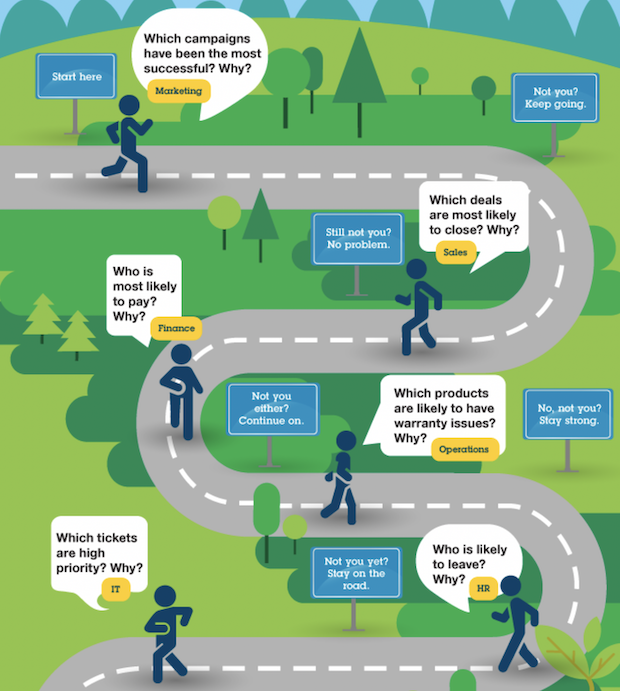
    These questions are likely to be simple, but finding the answers may not be: this is why data science and machine learning are so powerful. For the marketing function the key questions may be: “Which campaigns have been the most successful? Why, and how can we predict which ones will be successful in the future?” For operations it may be: “Which products are likely to have warranty issues? Why, and how can we predict these issues ahead of time and mitigate the problem?”

    Answering these types of business questions with machine learning and a data science methodology leads to game-changing insights that go beyond conventional data analytics and reporting. The result is true competitive advantage based on innovative deployment of new, data-driven models.

    Next, build data science into the innovation cycle

    With any new product or service design and development, part of the innovation process must involve understanding how data can be leveraged as a key innovation component. Smart organizations understand how to embed machine learning and AI into the concept at the beginning of development, in conjunction with the design process, and quantify the value AI-driven learning will create.

    Innovation can and should be a cycle of continuous refinement and improvement, not a one-shot effort. With machine learning and data science it can, as organizations implement data-driven solutions to enhance key benefits and capabilities.

    The possibilities for rapid and effective innovation are practically unlimited. Nearly every device we use on a daily basis from a toothbrush to our favorite belt could potentially leverage data to provide insights to product teams and end users in ways we could never imagine.

    For example, when designing the “smart shoe” of the future, a shoe company may think about how sensors contained in the shoe can be used to understand running and walking behavior in order to iterate the next version of the design or provide feedback to users. The data could be leveraged to predict how long the shoes will last, what shoes the wearer may enjoy next, or if product defects are becoming apparent.

    It’s important to think through the practical details of embedding advanced data science solutions into product or service development. How will the data will be transmitted, stored, and then leveraged in the context of the product or service ecosystem? For example, will sensor data be transmitted to an app that then uploads it into an enterprise machine learning solution to synthesize, model and score the results to deliver insights? Or will the product be capable of doing the scoring within the device itself? These types of questions require deep understanding of the available data science methodologies and algorithms as well as the design process itself.

    Finally, expand the use of data science to drive operational innovation

    Data science and advanced, intelligent analytics can take data from being simply an output displayed on a dashboard or in a standardized report to an integral part of an organization’s planning and execution of new innovations and enhancements to the customer journey.

    This largely untapped opportunity resides in how data is leveraged. For example, think of all of the unstructured data in the form of customer comments sitting in spreadsheets and text files throughout your organization. What if that could be used to generate actionable insight in real time? Whether you are collecting customer feedback through a traditional Net Promoter Score survey or looking to leverage operational data that is stored in a traditional business intelligence tool, advanced analytics can help deliver insights and create sustained competitive advantages.

    Historically, most companies have tried to generate this insight manually, by having a few employees read through customer comments and try to capture the core thoughts behind the words. While marginally effective for small numbers of comments, this method is time­consuming, expensive and labor­intensive.

    While the human brain is still the best tool to quickly understand what a customer is saying and to quantify the varying degrees of satisfaction, we humans have an inherent flaw: we are unable to be truly objective. Each of us processes what we read based on our experiences, feelings, understanding and personal context. Two people reading the same comment can have very different opinions about what it is really trying to say. This method is not very repeatable or even comparable from one day to the next.

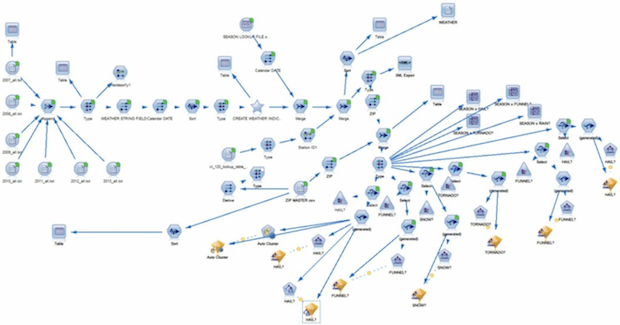
    Today, algorithms for text analytics allow companies to deliver a scientific and repeatable method of dealing with unstructured content, transforming it into structured data. This use of intelligent automation can enable comments to be analyzed and processed in real time as they are received on social media or customer surveys. The organization gains the ability to react immediately, responding to issues or starting work on potential product improvements.

    The new structured data produced from the text analytics can then be used in a predictive analytics model to predict outcomes and customer behavior, with that information leveraged yet again to assess the outcome of changes. Automatically generated insight drives improvements, while making predictions that can be tested to fine-tune the experience.

    The bottom line: hindsight gives way to foresight

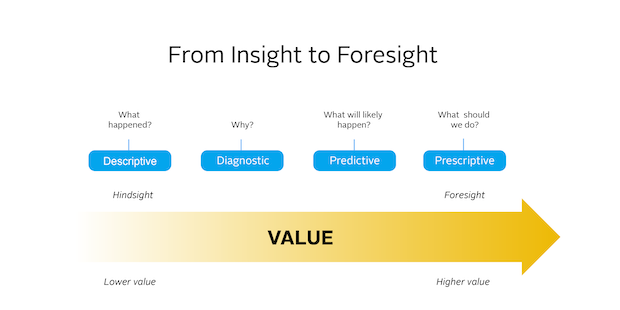
    Data science enables companies to move from relying on hindsight to looking forward. Before data science, this was extremely difficult. Organizations were always looking backward, describing the data in simple terms and generating basic understanding. More advanced interpretation and prediction was an inexact science at best, when it was undertaken at all.

    Data science tools and methodologies change all that, by creating the ability to move beyond description to diagnosis, prediction and prescriptive action. The value comes not from simple efficiency, but from foresight… an approach that is truly innovative!

    About the author
    Kellan Williams is an advanced analytics expert and experienced data scientist with proven analytical acumen. His experience spans many sectors and his skill set has offered him the ability to have high impact roles at IBM Global Business Services, Huntington Bank, Safelite Autoglass, LBrands, and Abercrombie and Fitch.

    Kellan has spent the last 12 years helping companies turn their data into actionable insights. Kellan employs advanced methodologies and cutting edge technologies to transform business problems into sustained competitive innovations. He specializes in the areas of text analytics, predictive modeling, and advanced forecasting.

  • The culture of innovation is coming of age and proving to be a prized driver of business success

    Beyond the basics: how to inspire and best benefit from a culture of innovation (COI).

    It should come as no surprise that innovation has become a top priority for corporations, start-ups and enterprises of all types and sizes. The degree of innovation, the playing fields where it takes place and even its very definition — all have all grown and diversified exponentially in recent years.

    Where once we’d see sporadic innovations springing from major mechanical or scientific breakthroughs, today’s product, service and digital experience creators are pumping out new innovations from moment to moment. There are still solitary basement inventors, garage incubators, government think tanks, innovation labs and corporate R&D departments cranking out innovation today. But the latest — and still relatively new — innovation source is forming through the adoption of diverse cultures of innovation integrated across entire organizations.

    Unless you’ve sworn off of social media, haven’t visited your LinkedIn account or opened your email recently, you’ve probably read about the culture of innovation. You may even have experienced it firsthand at work. Much has been written on the topic by the likes of McKinsey and Accenture, among others, but the common thread reveals a few key actions necessary to create a thriving culture of innovation:

    • Encourage all employees to be creative and innovative
    • Promote (or require) cross functional collaboration
    • Reward experimentation and risk-taking
    • Support (or tolerate) failure in the pursuit of learning
    • Empower through a flatter corporate hierarchy

    What this top-line composite list of common COI directives may lack in detail, it does provide an opportunity to augment with other attributes based on our experience with clients in the innovation space.

    Increase your innovation odds through open participation

    Now in our fourth decade as a leading brand and innovation firm, Tenet Partners has successfully collaborated with countless product and service clients, and their customers, to create innovative solutions. Although we are a team of experienced and talented brand and design innovators, it no longer surprises us that inspiration for great ideas can come from just about anyone, anywhere, at any time. Of course, you need a way to harness inspiration and translate that into viable, real-world solutions (more on that below), but having diverse and numerous sources of input offers clear benefit over limiting contributions to a core team or sweating it out alone.

    Larger organizations have the distinct advantage of numbers, with each employee bringing a unique blend of experiences and expertise to challenges. Opening participation in innovation up to more people increases the odds of finding the right inspiration for the next breakthrough product or service. It is well worth casting the net far beyond just your internal R&D, Engineering or Consumer Insights departments.

    Break down innovation silos

    Many companies still have rigid divisions between very specialized functions. Sometimes those individual functions can be quite innovative, even in unexpected areas such as accounts receivable, HR, IT or custodial services. Typically, pockets of innovative thought are confined to creatively solving problems for the innovators’ own departments. By utilizing a cross-functional COI approach and cross-pollinating ideas with other departments, however, the innovative output can be far richer.

    Innovative ideas developed for one purpose may be applicable to other functions, potentially delivering company-wide benefits. A filing idea in the mail room might inspire a digital application concept in software design, a cafeteria backroom workaround might lead to a unique structural packaging solution, or a quarterly boardroom meeting presentation might inspire your next great advertising campaign.

    Visualize innovation concepts to make them universally understood

    Numerous innovation methodologies and tools are available to companies building or flourishing in their COI approach, many incorporating variations on design thinking. Empathy, one of the cornerstones of effective design thinking, is traditionally considered a way for innovators to understand the consumers or end users of one’s goods or services and the experiences they encounter. Empathy is also invaluable internally when collaborating with cross-functional teams who do not always work, think or even communicate in the same ways. It is all too easy for inspirational seed ideas to get lost in translation without a way to share thoughts in a clear and universal way.

    At Tenet we utilize our Co-Magination® approach where design innovators, skilled in the techniques of organizing and visualizing conceptual material, are integrally involved at every step in the innovation process. When concepts are visualized on the wall, everyone can see and understand the same ideas, and be inspired by them to build iterative variations and improvements. It’s a matter of not losing the designer when design thinking.

    Align innovations with your brand

    Innovation usually proves most effective if it is consistent with, and supportive of, what the organization’s brand stands for. A healthy and broad-reaching employee engagement program can ensure everyone understands and lives by the same brand promise, principles and messaging. It can also lay the foundation for innovation that is consistent with the brand.

    The most successful new products and services are those that build on a brand and are identifiable as “something we’d expect from them.” Innovating with your brand in mind is important; Innovation can lead to significant market successes through disruption, but disruption for disruption’s sake can be risky business and potentially dilute or contradict who you are.

    Monitor and measure innovation to gauge business success

    Increasing innovation across an organization has clear advantages and offers significant rewards when undertaken effectively. Determining what success means and measuring it is also incredibly important and can be equally challenging. The ability to attract and retain top talent, gain market share and increase profitability are among many factors that can be measured to gauge impact.

    Knowing where you are on the path to a fully integrated innovative culture, how it is paying off, or simply where you stand versus competition, makes measurement of your COI invaluable to your business success. Tenet Partners’ ongoing Brand Power research, which we publish in our annual Top 100 Most Powerful Brands report, recently added Culture of Innovation as a metric to predict value and cash flow. As James Gregory, Tenet Partners Chairman Emeritus reports “By adding the Culture of Innovation attribute to the historical attributes, the predictability of the cash flow multiple improved from 64% to 77%.” Other organizations also see the value of measuring innovation: last year, McKinsey published a study showing a strong correlation between integrating design thinking approaches across an organization and significant, measurable revenue growth and shareholder returns.

    The bottom line: enhance and go beyond the basic principles of COI

    • Embrace the likelihood that your next great innovation could be surfaced or inspired by almost anyone in your organization.
    • Encourage cross-functional team collaboration, even if they speak entirely different innovation languages.
    • Take advantage of your organization’s size and diversity to increase your odds of successful innovation.
    • Harness design-thinking talent and visualization skills to capture and communicate concepts throughout.
    • Align your innovation efforts with a clear and consistent expression of your brand.
    • Track how well your COI is delivering on key metrics such as talent retention, brand value and financial rewards, among others.
    • Treat your COI as you would any good innovation initiative: collaborate, iterate, learn, and adjust as needed.