Tenet Partners named top-three brand strategy agency by Clutch

Clutch Global Fall 2025 award badge

New York, NY (December 15, 2025) – Tenet Partners, a leading brand and strategy consultancy, has been recognized as a Clutch Global Award Winner for Fall 2025—for product branding (#1), brand messaging (#2), brand strategy (#3) and naming (#10).

As the creator and innovator of brands, Tenet next year celebrates its 50th year in business helping to guide market-leading clients, including Bluetooth, Fairtrade, Edwards Lifesciences and Cadence Bank, to their futures through by fusing foresight, strategy, design and technology to drive growth and transformation.

Clutch, a leading global marketplace of B2B service providers, selects honorees through its proprietary Clutch Rank, which evaluates companies based on verified client feedback, industry expertise and overall market presence. Clutch Global Awards represent the highest level of recognition on the platform: Clutch’s Leaders Matrix, reserved for the top 15 companies in each category worldwide.

“This season’s awards reflect the depth and breadth of our capabilities as a firm, as well as our intentional strategy of continuously infusing evolving tools and technologies to build brands with true impact,” said Hampton Bridwell, CEO of Tenet Partners. “Over the nearly half-century we’ve been in business, Tenet has prided ourselves on not only keeping up with the times, but leading the change in to connect brand with new disciplines, including innovation, data science and AI, so that we can better help our clients build the futures they envision.”

“The Clutch Global Award winners represent what’s possible when businesses put client success at the center of everything they do,” said Mike Beares, Clutch founder and CEO. “Their innovation and dedication inspire the global standard for partnership excellence.”

About Tenet Partners

Founded 50 years ago and headquartered in New York City, Tenet Partners is one of the leading brand strategy firms in the United States. Tenet operates at the intersection of insight and foresight, giving business leaders and marketers the power to bridge to new futures through imagination and creativity. With predictive brand techniques that span research, analytics, strategy, design and digital, Tenet helps its clients dimensionalize the businesses they’re building to capitalize on new opportunity and turn visions into reality. www.tenetpartners.com

About Clutch

Clutch empowers better business decisions as the leading global marketplace of B2B service providers. More than half a million business leaders start at Clutch each month to read in-depth client reviews and discover trusted agency partners to meet their business needs. https://clutch.co/profile/tenet-partners

For more information
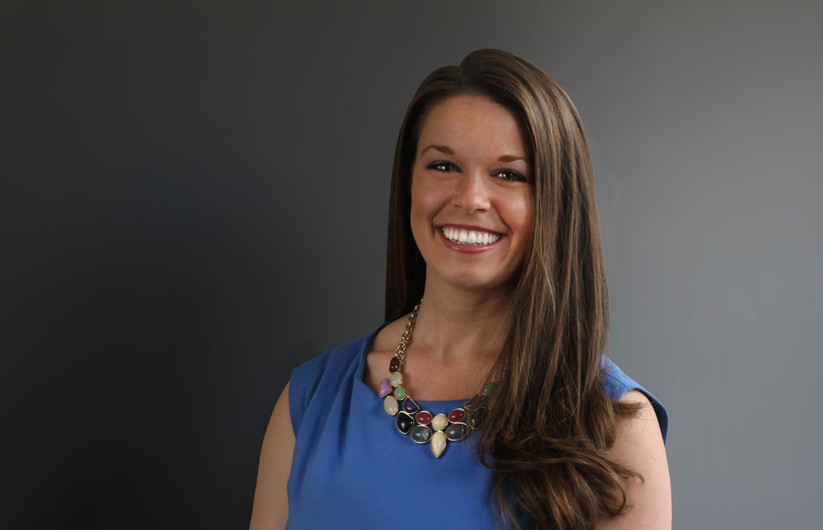
Jessica McHie
Business Development and Marketing
Tenet Partners
+ 1 212 329-3166
jmchie@tenetpartners.com

###

What’s in a name?

Naming a product or organization can be surprisingly difficult. It’s also a great opportunity to evoke emotion, memorability and positive associations for your brand.

It sometimes seems as if names are generated randomly in a process using a blindfold and a dart board—nice-sounding syllables jammed together with no real intent.

Pop quiz: What are these?

  1. Nubira
  1. Nuvis
  1. Stelara
  1. Stellantis

You’ve probably heard of at least one of these—Stellantis—because it’s been in the news recently. But if you didn’t already know that it’s an international auto manufacturer with 14 brands under it, would you have any idea what the company does?

(The others are: a) a car; b) a camera; and c) a pharmaceutical.)

The function of a name

A century ago, company names tended to be descriptive labels. You could tell what the company did just from its name. U.S. Steel. Standard Petroleum. General Motors. Bell Telephone. International Business Machines. The name communicated essential information about the company: that was part of its purpose.

That approach has fallen out of fashion, in part because so many large enterprises are highly diversified; a straightforward label would confuse, rather than clarify. Also, the number of companies—and therefore the number of trademarked names—has become so large that it’s nearly impossible to own a name like this.

It’s possible to get around the literal label name challenge without fully stepping away from it. For example, the label can be turned into an acronym. 3M, a name with high recognition, wasn’t the actual name of the company until 2002. It had been Minnesota Mining and Manufacturing—name that had nothing whatsoever to do with many of its products.

A name needs to be memorable. And yet, many are not. They fail to gain traction in the public awareness. Google renamed itself Alphabet nearly a decade ago, but few outside of the investment community think of it as anything other than Google. In common usage, it probably always will be. The company is synonymous with its product.

Sometimes a forgettable name may even provide a benefit by distancing an enterprise from controversy. An example of this is Altria, which formerly had been the Philip Morris tobacco company. As awareness of the health hazards associated with tobacco increased, a name strongly associated with such a problematic product could be seen as a liability.

What makes for a great name?

At the very least, a name should be “sticky,” so that it increases awareness. It should be easy to say and easy to parse when written. But that’s not enough.

A good name is tied to strategy as well as brand personality. It should age well. It needs to “feel” right and resonate in a way that speaks to your audience—it should, ideally, say something about the product or company and spark emotion.

The best names are those that become part of the brand’s story. America’s first high-speed rail service, Acela, is an excellent example. The word itself, derived from “acceleration” and “excellence,” connotes speed and suggests the benefit passengers get when they choose the service.

A Tenet Partners client, Broadview Federal Credit Union, shows how an evocative name can spark a powerful narrative that didn’t previously exist. The legacy naming was very literal, in keeping with the category: a straight-label approach that described location and clientele. Changing it to Broadview pivoted from talking about the enterprise to talking about the brand’s essence. The name became a centerpiece of a new brand story about expansive future possibility and all-encompassing customer relationships—taking a broad view of people’s finances and the credit union’s important role in the community. By changing the focus to put the spotlight on outcomes and customers, Broadview now has a way to show that it truly is different.

All the good names are taken… or are they?

Naming is a highly stimulating creative exercise. It’s truly fun to play with words, and it taps into the creativity of your team at the deepest level. But it’s not as easy as one might think. At Tenet, it’s not uncommon to come up with several hundred names for a given assignment before all is said and done.

Chances are, any name your team comes up with, no matter how original and clever it might seem, has been used by someone at some point. A legal review of trademarks is an essential part of the process. Prior use is not a deal-breaker—a name can still pass muster if the existing trademark is out of category—but we counsel clients to submit multiple names for clearance and not to fall in love with any particular name until the lawyers give the go-ahead.

Establishing a naming process grounded in objective criteria is critical. The question to answer is not whether the team likes a name. Instead, a name should be judged by whether it supports the business or product, and helps move it forward.

Even if the name you love isn’t available, you can still come up with a great one. In the end, a name is another tool for communications. If you can connect the dots to your brand and build a narrative around the name you’ve chosen, that’s a strong indication that it will serve you well and stand the test of time.

Think about that as you go about your day. What names have stuck with you over the years? Why do you think that is? What is it that you like, or dislike, about a particular name? What does it say to you? Let us know in the comments.

Headquarters 11 West 42nd Street
Penthouse Floors 31/32
New York, NY 10036
212 329-3030

Boston
Columbus
Los Angeles

A hexagon-shaped badge from Clutch, with the text 'Top Branding Company' on top and '2024' on the bottom